2025 – 2026
Soil-analysis rover
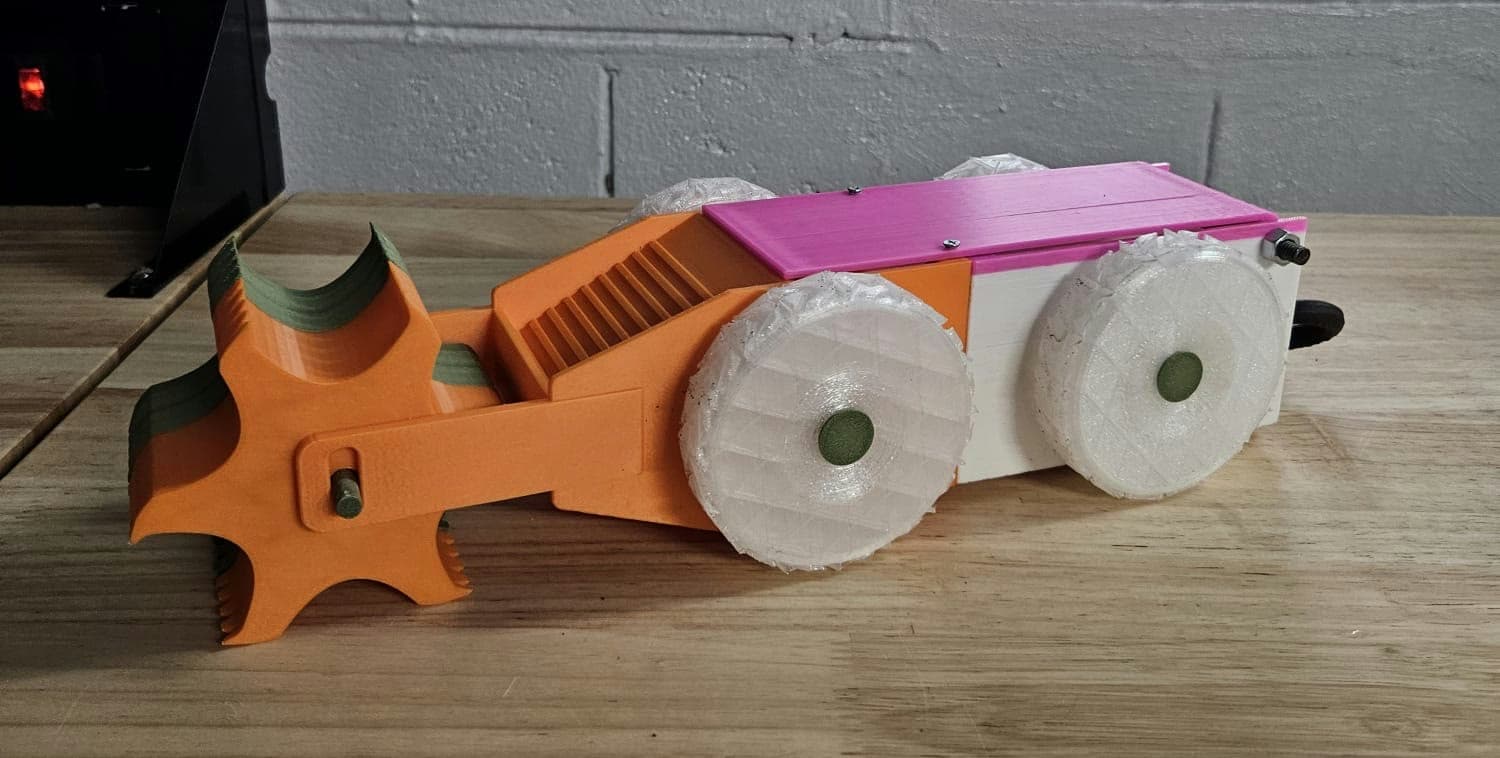
The current cycle: a rover built to reach the ground and sample it. Wide printed wheels for loose terrain and a front collection head, shown here as an assembled prototype during fit checks.
Payload builds the mission system that gives each rocket a purpose beyond flight — combining mechanical design, electronics, programming, and testing to complete the objective the competition sets that year.
Because the objective changes every cycle, so does the hardware. The division has built a walking robot, an aircraft, a sealed capsule, two rovers, and a helicopter — and started each one from a blank page.
One mission per competition year, newest first. The through-line is not a single machine — it is a division that rebuilds its entire discipline stack annually and keeps flying.
2025 – 2026
The current cycle: a rover built to reach the ground and sample it. Wide printed wheels for loose terrain and a front collection head, shown here as an assembled prototype during fit checks.
2024 – 2025
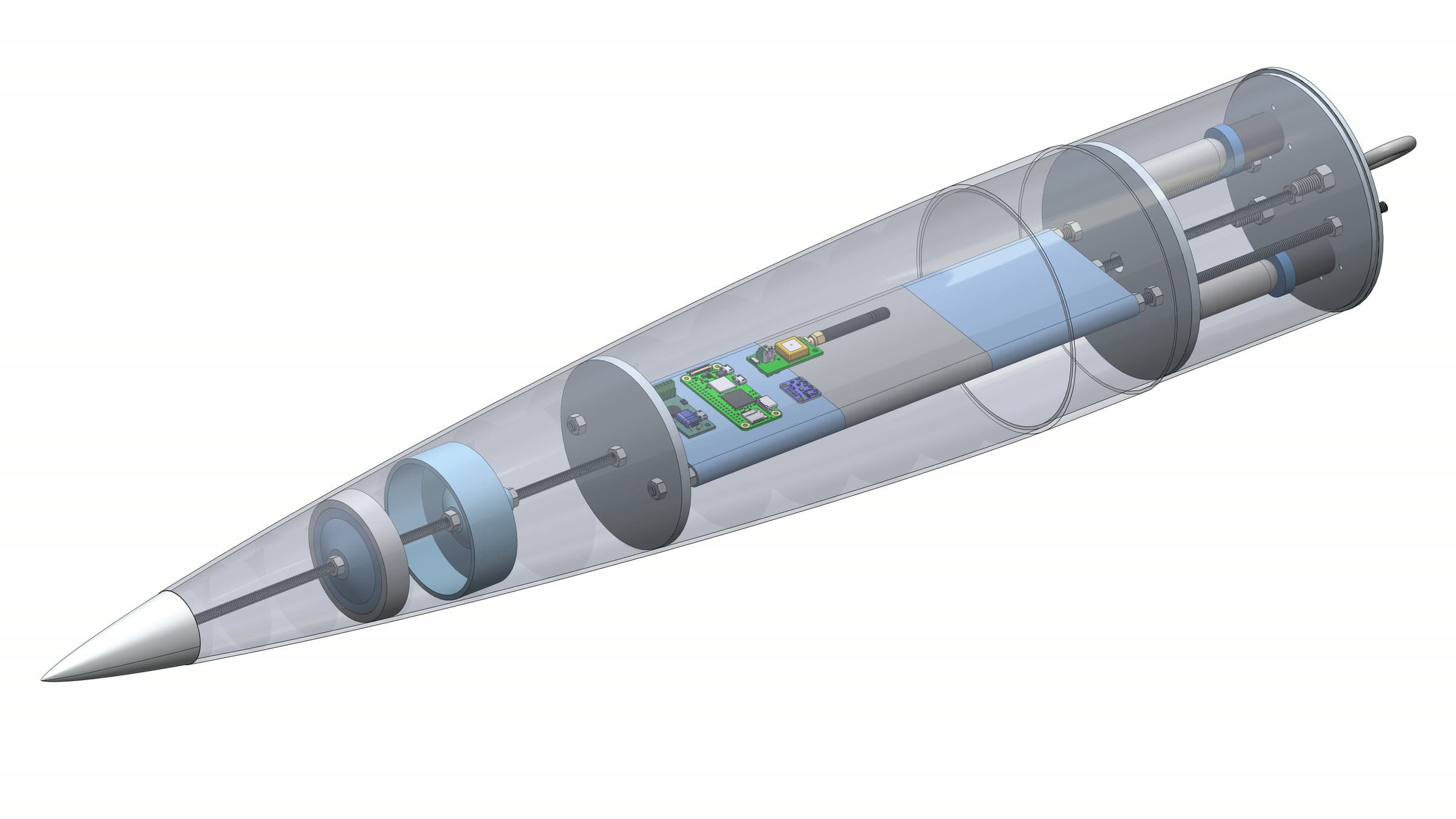
Payload does not stop at the payload. This vehicle-level section view places the electronics bay, its bulkheads, and the payload volume inside the airframe — the drawing Launch Vehicle and Payload work from together to confirm everything physically fits.
2023 – 2024
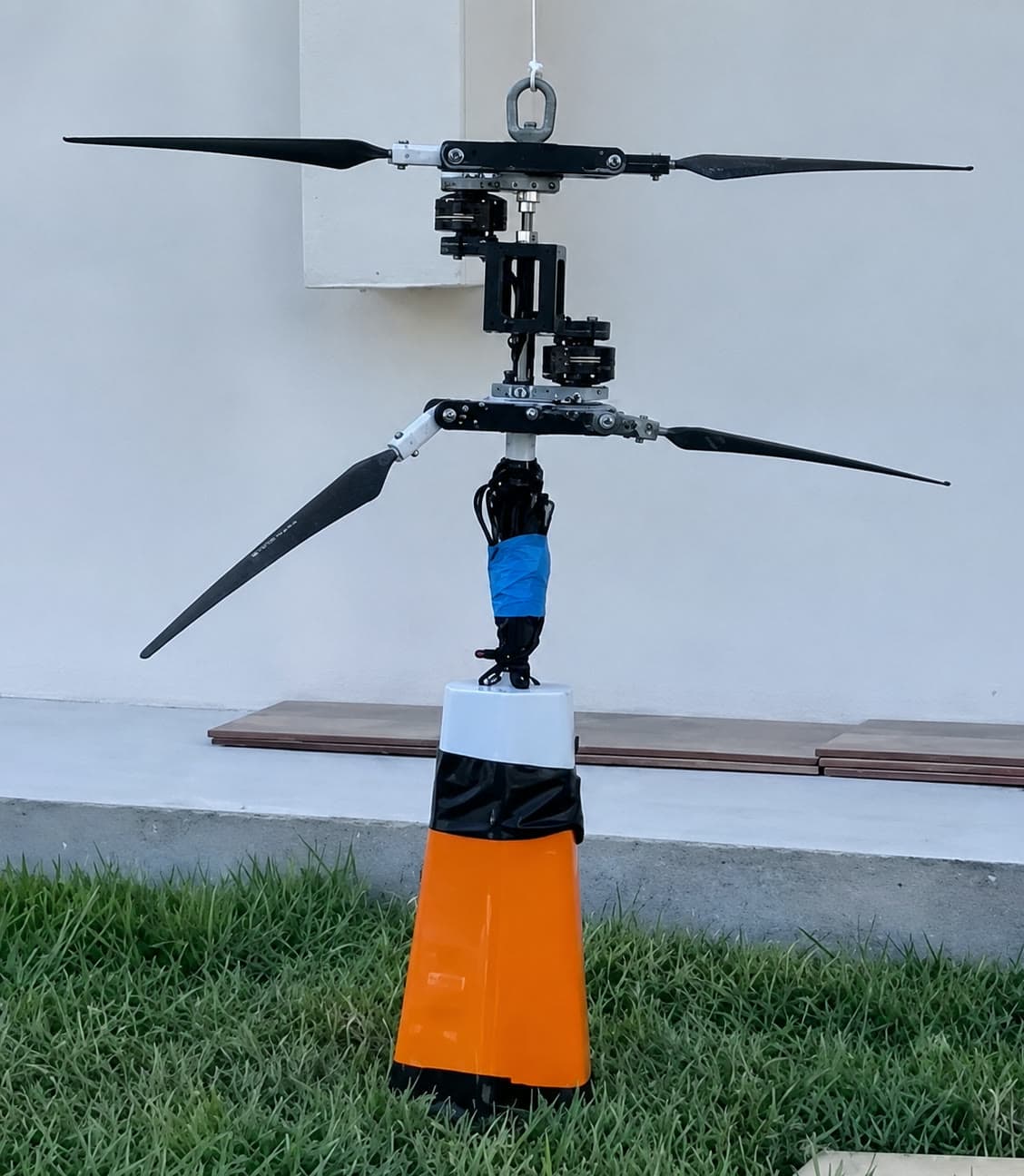
Two counter-rotating rotor sets on a single shaft — a coaxial helicopter built to carry the mission's STEMnaut crew and descend under its own control. Photographed here during ground checks before flight.
2022 – 2023
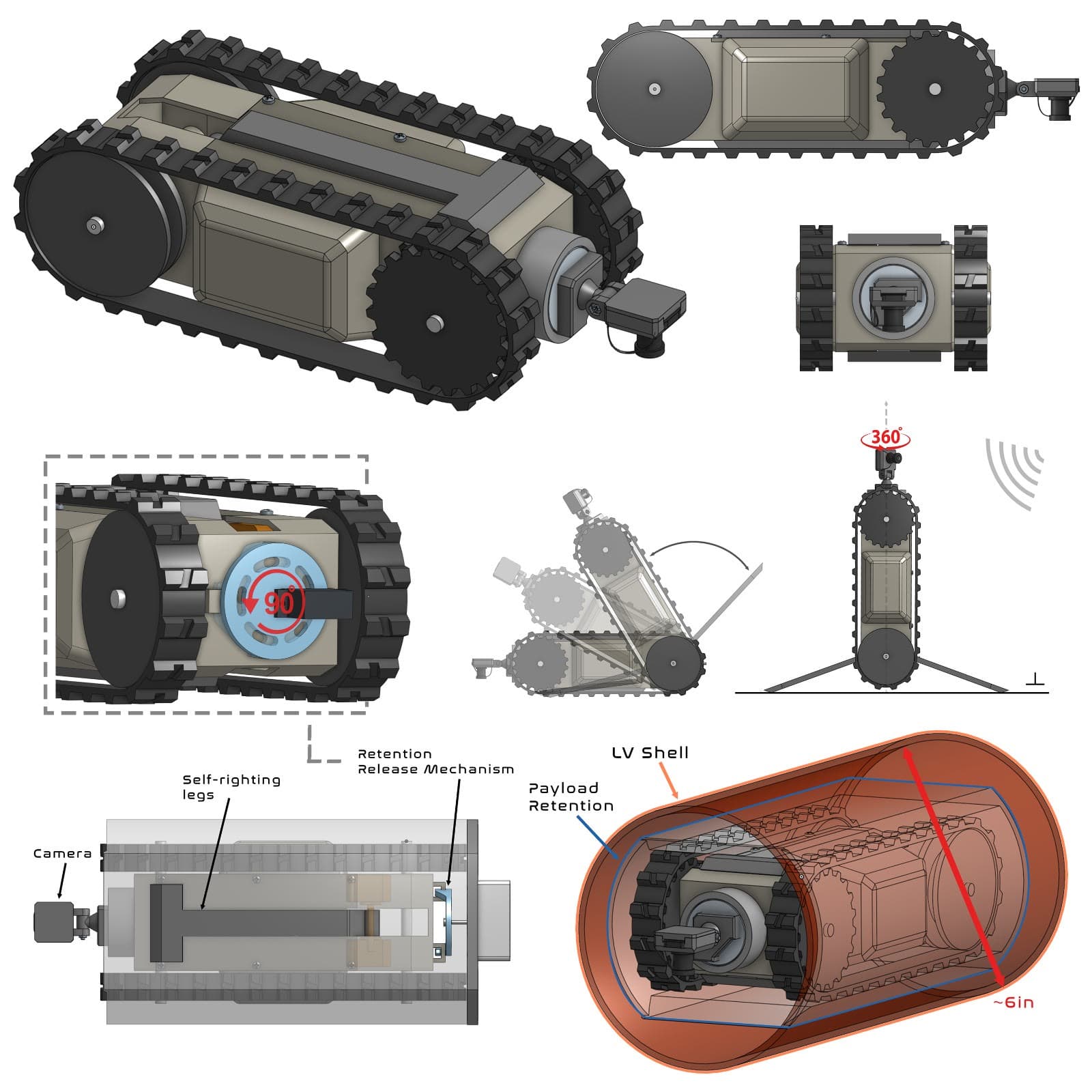
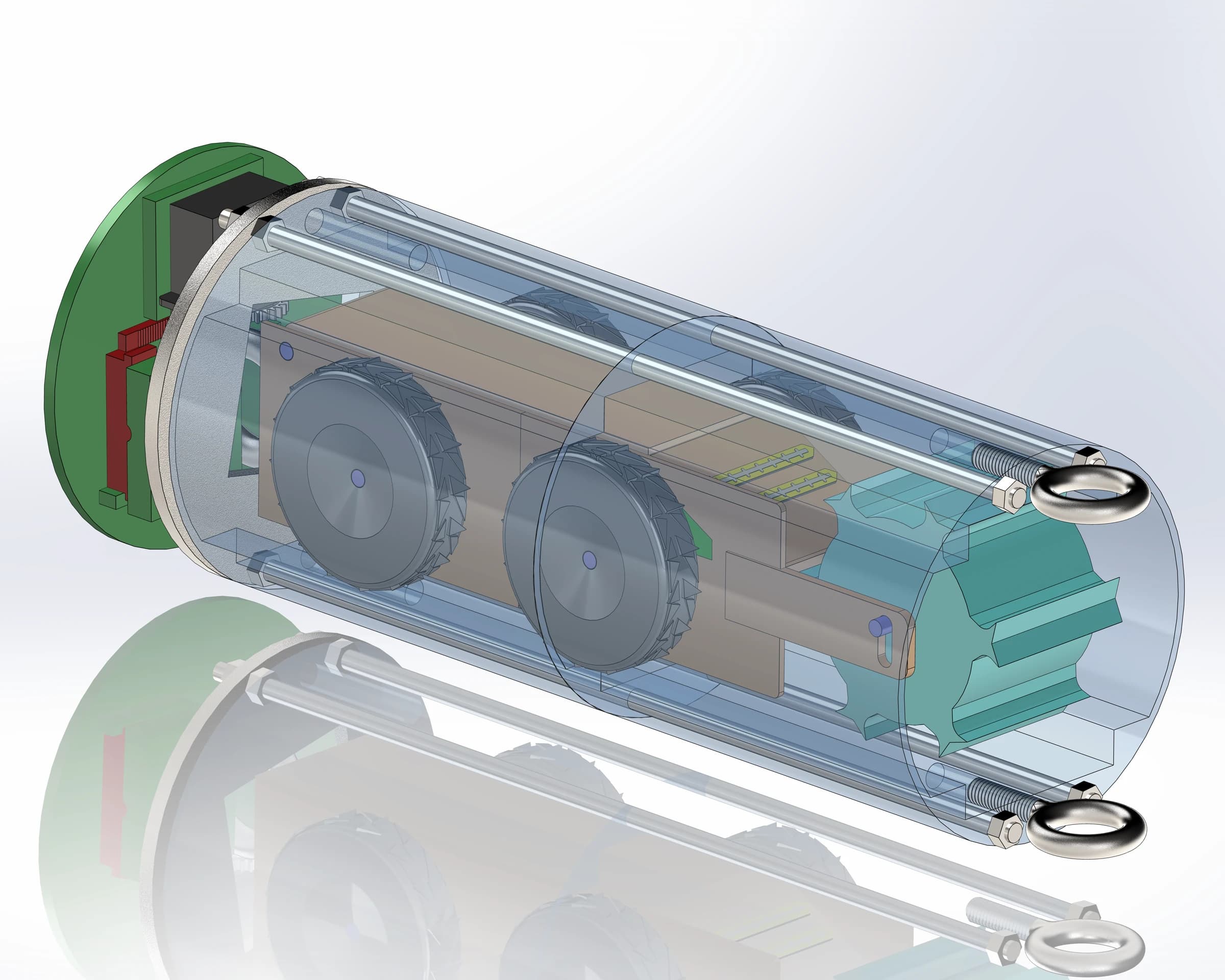
A tracked rover that had to survive being packed in a rocket, released, and then recover from whatever orientation it landed in. The design pack covers the retention interface, the release mechanism, self-righting legs, a 360° camera mast, and the six-inch shell it all had to fit inside.
2021 – 2022
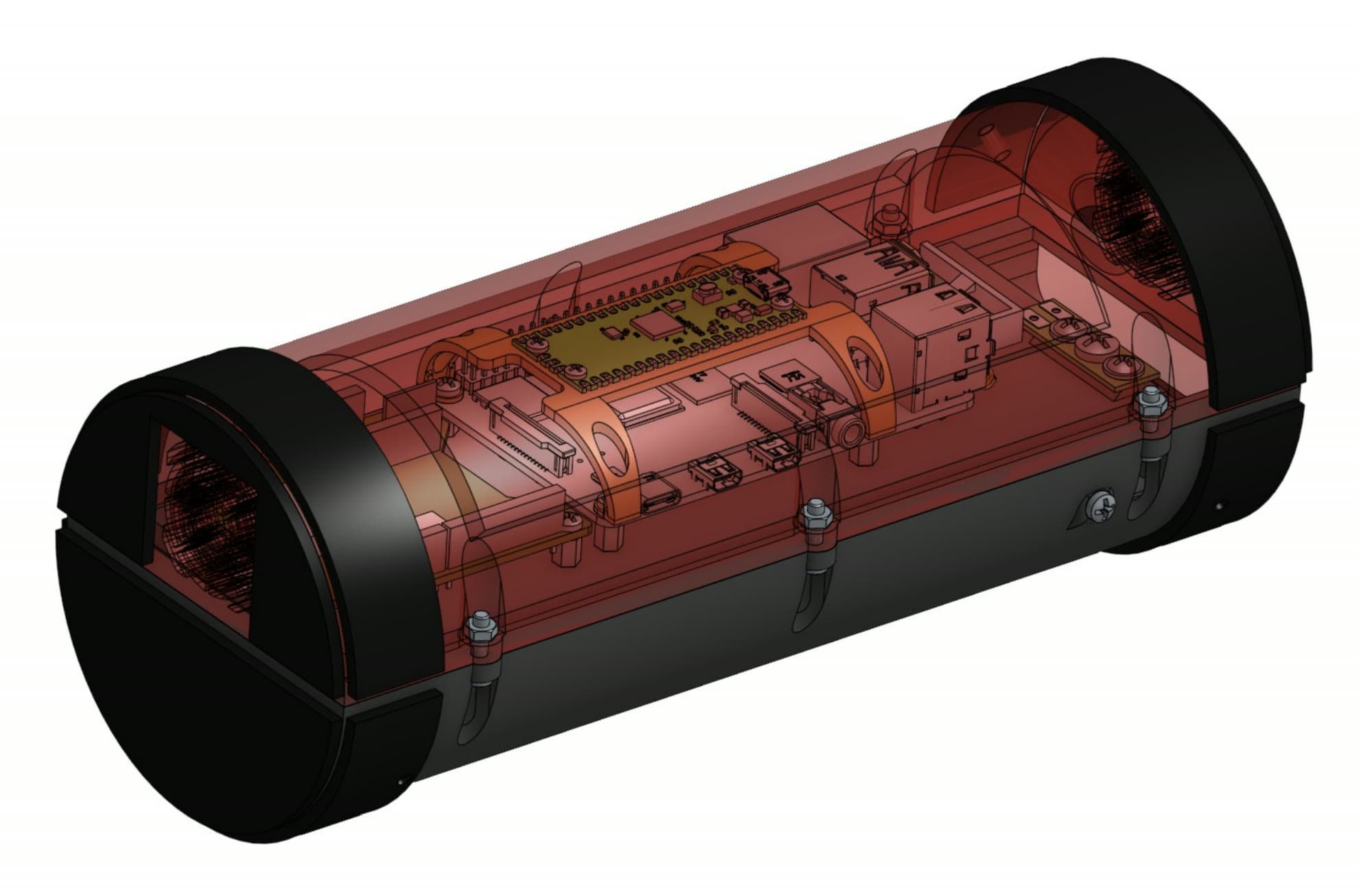
A sealed cylindrical capsule sized to the body tube, carrying a single-board computer and its supporting electronics on an internal rail. The transparent shell in the render is how the division checks clearance and cable routing before anything is machined.
2020 – 2021
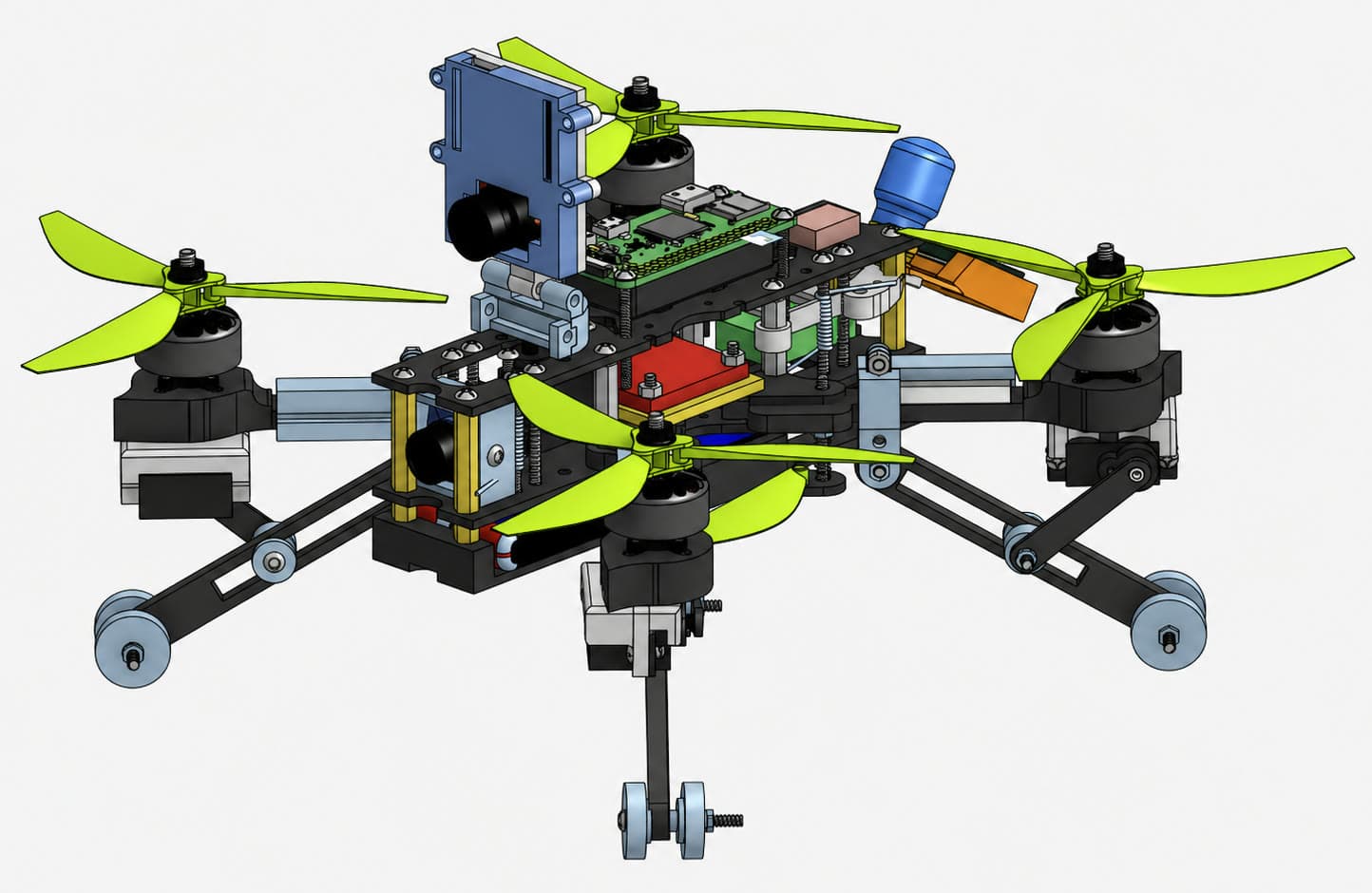
A four-rotor aircraft designed to be carried inside the airframe and released in flight. The CAD shows the folding-arm structure, camera mount, single-board computer, and landing gear packed into the volume a rocket body tube allows.
2019 – 2020
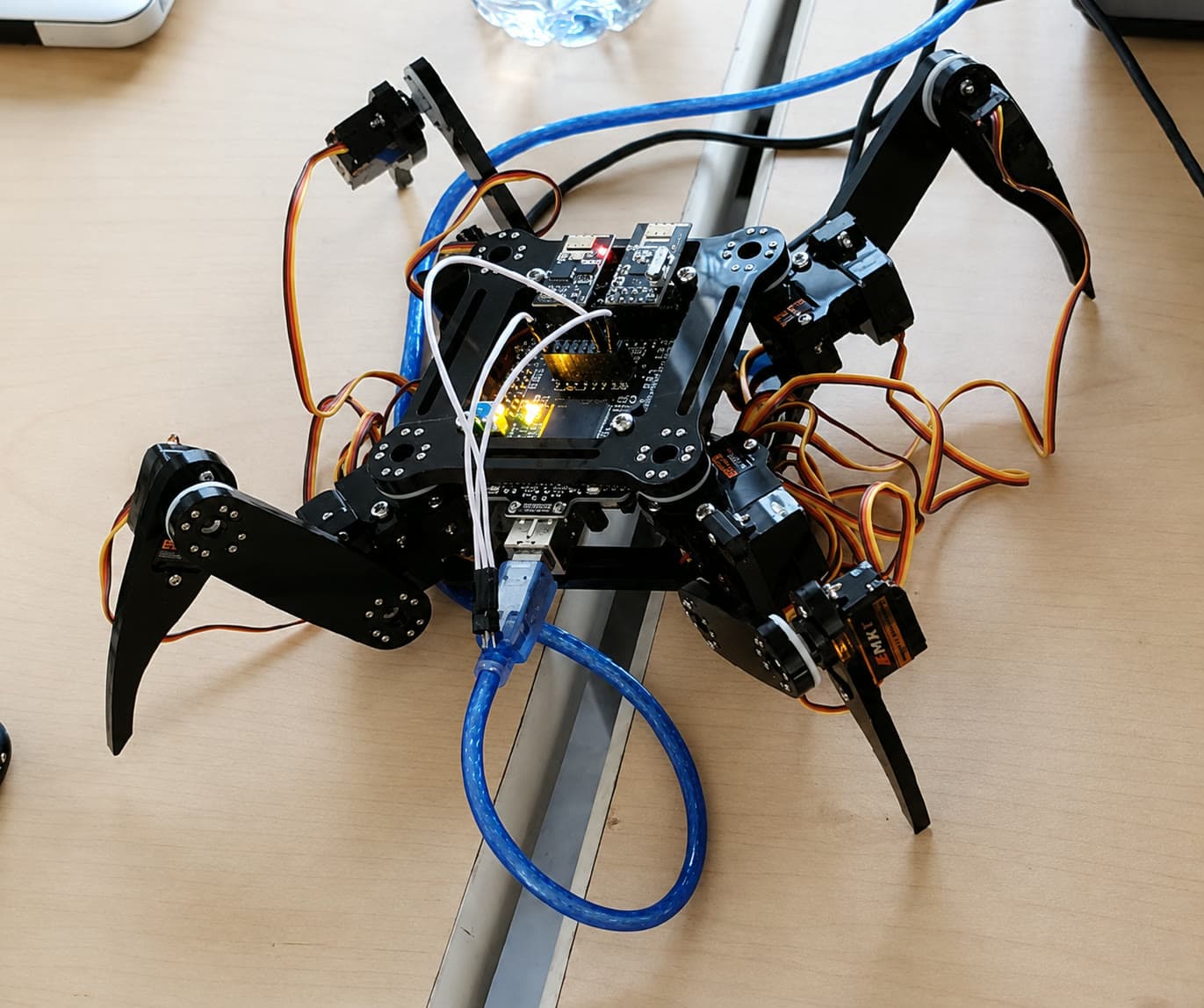
The earliest payload in the team's record: a servo-driven hexapod built around a single microcontroller board, with every leg independently actuated. Walking gait rather than wheels — a deliberately hard first problem in coordinated actuation.
A payload spends the entire ascent clamped inside a body tube under launch loads. It has to hold, then let go, then work — and every one of those three has to be designed and tested separately.
Choosing, wiring, and powering the sensors that let the payload perceive anything at all.
The onboard software that runs the mission — unattended, once, with no chance to intervene.
Making the machine fit, mount, survive launch loads, and release cleanly from the airframe.
Deciding what the payload does after separation, and what it records while doing it.
Proving on the bench and in the field that the sequence works before it has to work in flight.
Payload is the division where mechanical, electrical, and software engineering have to agree with each other — a member who joins for one of the three usually leaves having done all three.
Payload turns each flight into a mission. It is where mechanical, electrical, and software engineering converge to achieve a real objective in the air — and the reason a DRACO launch is measured by more than altitude.
/ Join Payload
Every cycle Payload starts over with a new objective. If you want to build electronics, write embedded software, or design mechanisms that have to work the first time, this is the division.