Starfire

0ft
Apogee
0.0lb
Weight
0.00ft
Length
#0
Result
Inside Starfire
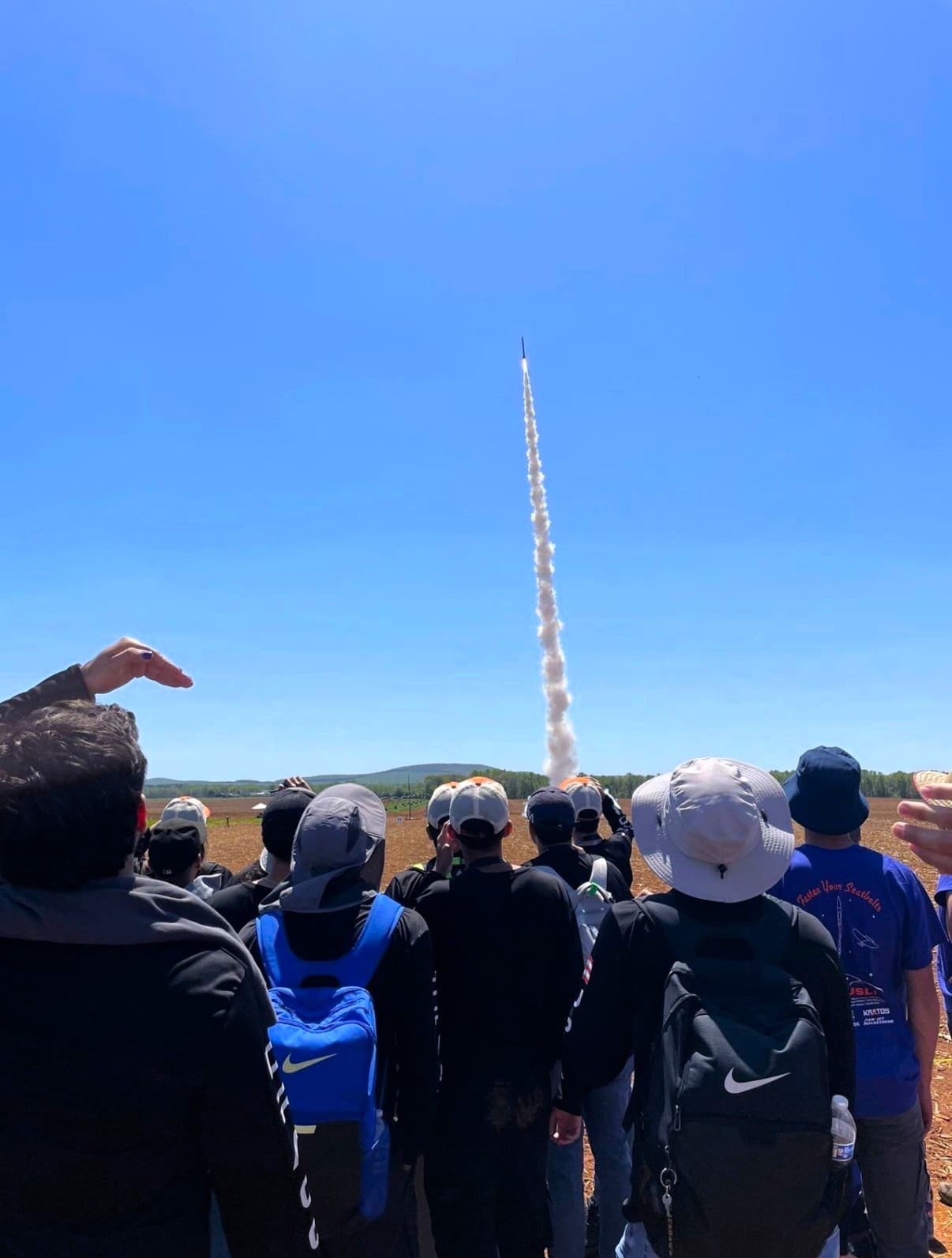
Starfire was DRACO's second competition vehicle and marked a major engineering step: the team moved to a mostly fiberglass, all-composite airframe and flew on a powerful AeroTech L2200 Mojave Green motor. At the 2024 NASA Student Launch in Huntsville, Alabama, the rocket reached an official scoring altitude of 5,102 ft — within roughly 200 feet of its 5,300 ft target — and was recovered safely. The vehicle was designed to carry C.H.I.L.D., a coaxial-helicopter payload built to deploy and autonomously land a set of 'STEMnauts.'
/ Mission Sequence
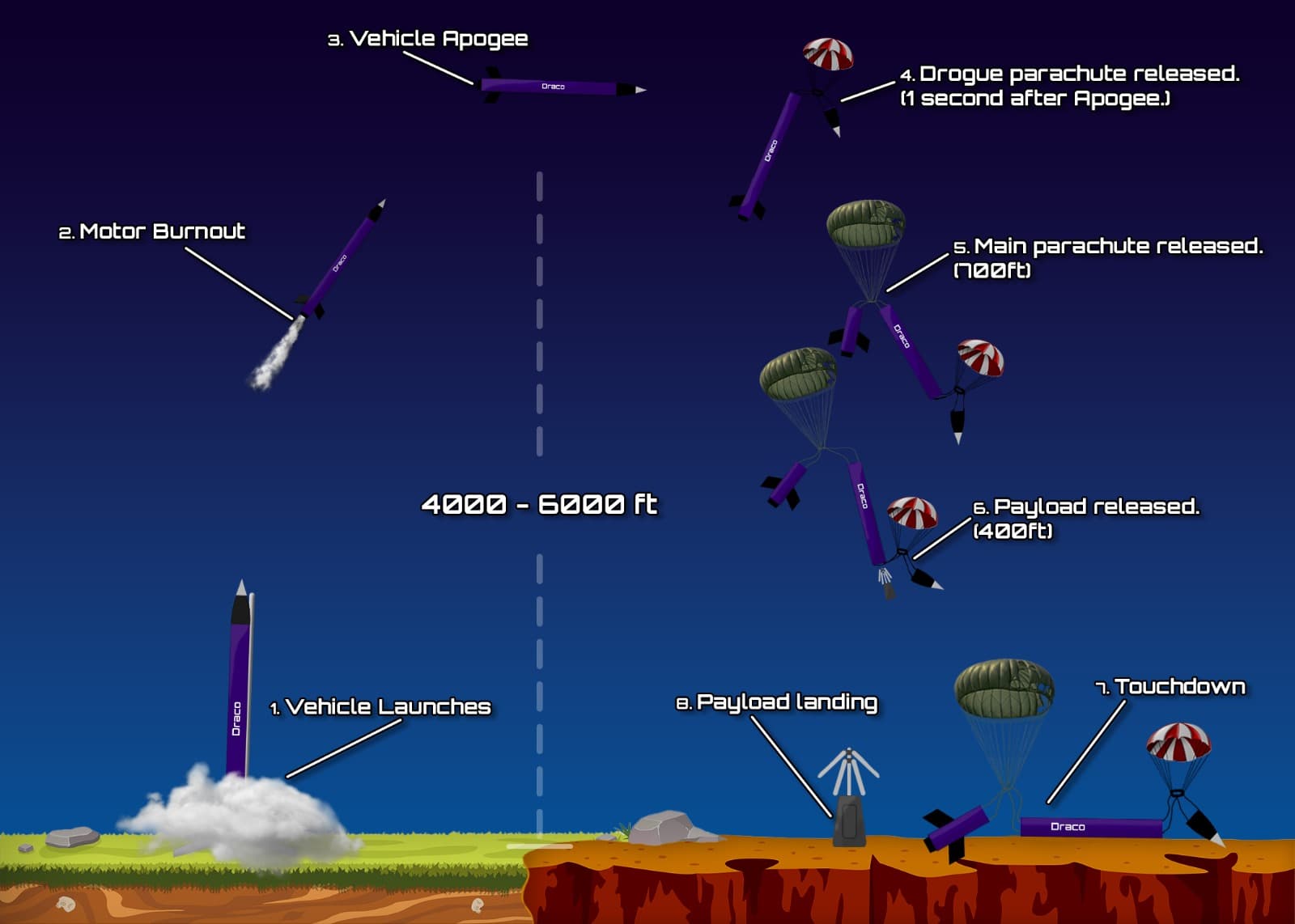
Concept of Operations
Concept of Operations — Starfire's dual-deployment recovery and C.H.I.L.D. payload deployment.
Starfire
Vehicle Overview

Internal-components overview · interactive labels coming soon
- Apogee
- 5,102 ft
- Weight
- 50.7 lb (wet)
- Length
- 11.25 ft
- Diameter
- 6.17 in
- Motor
- AeroTech L2200 Mojave Green
- Airframe
- G12 fiberglass airframes (all-composite structure)
/ Engineering Highlights
Key subsystems
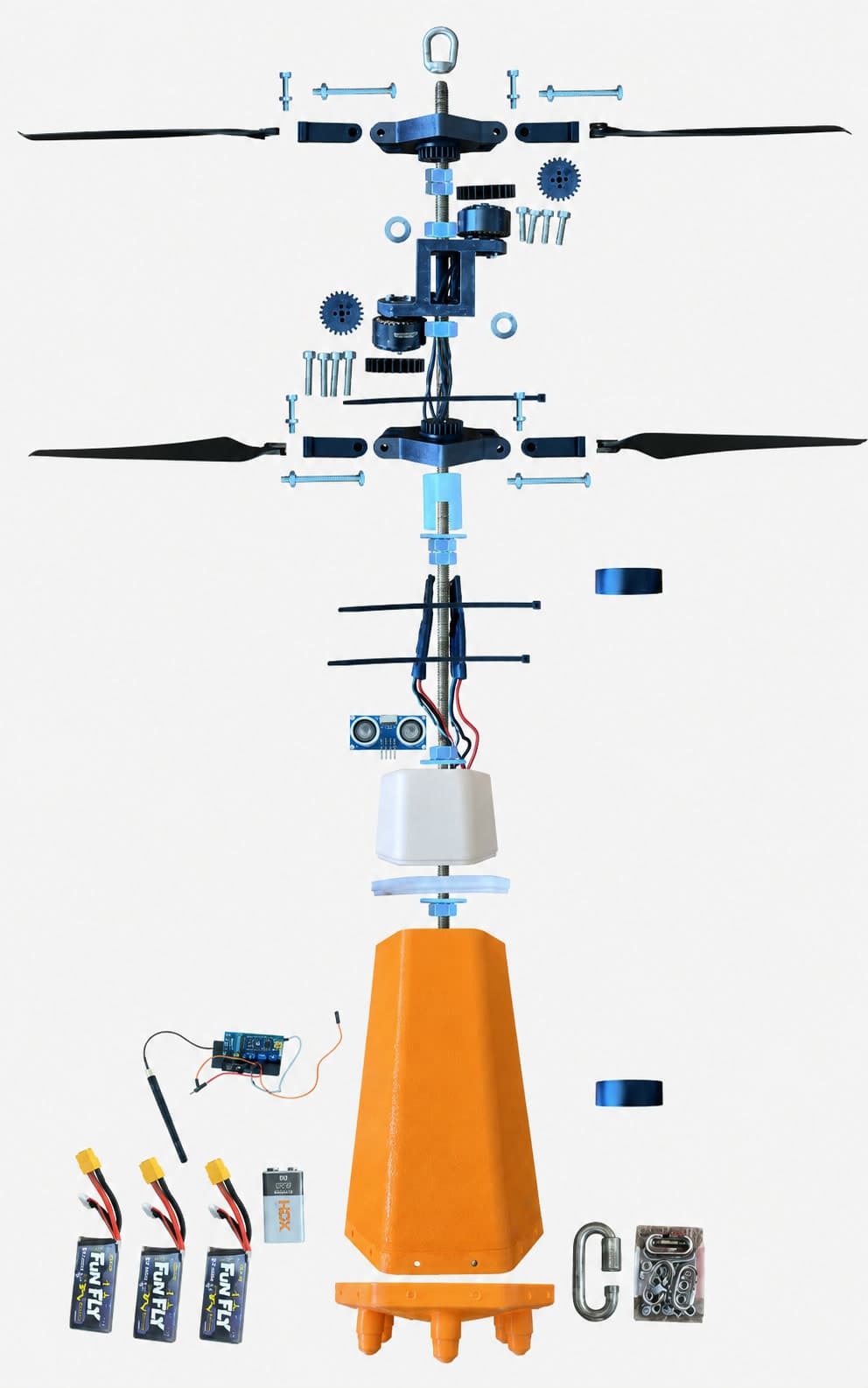
C.H.I.L.D. Coaxial-Helicopter Payload
An aerial-deployable coaxial helicopter with carbon-fiber rotors and a Raspberry Pi flight computer, built to autonomously land a set of 'STEMnauts.' The exploded view shows everything that had to fit inside the airframe: the counter-rotating rotor gearing, ultrasonic altitude sensing, battery packs, and the 3D-printed housing.
- Carbon-fiber, counter-rotating rotors
- Raspberry Pi flight computer
- Autonomous 'STEMnaut' landing sequence
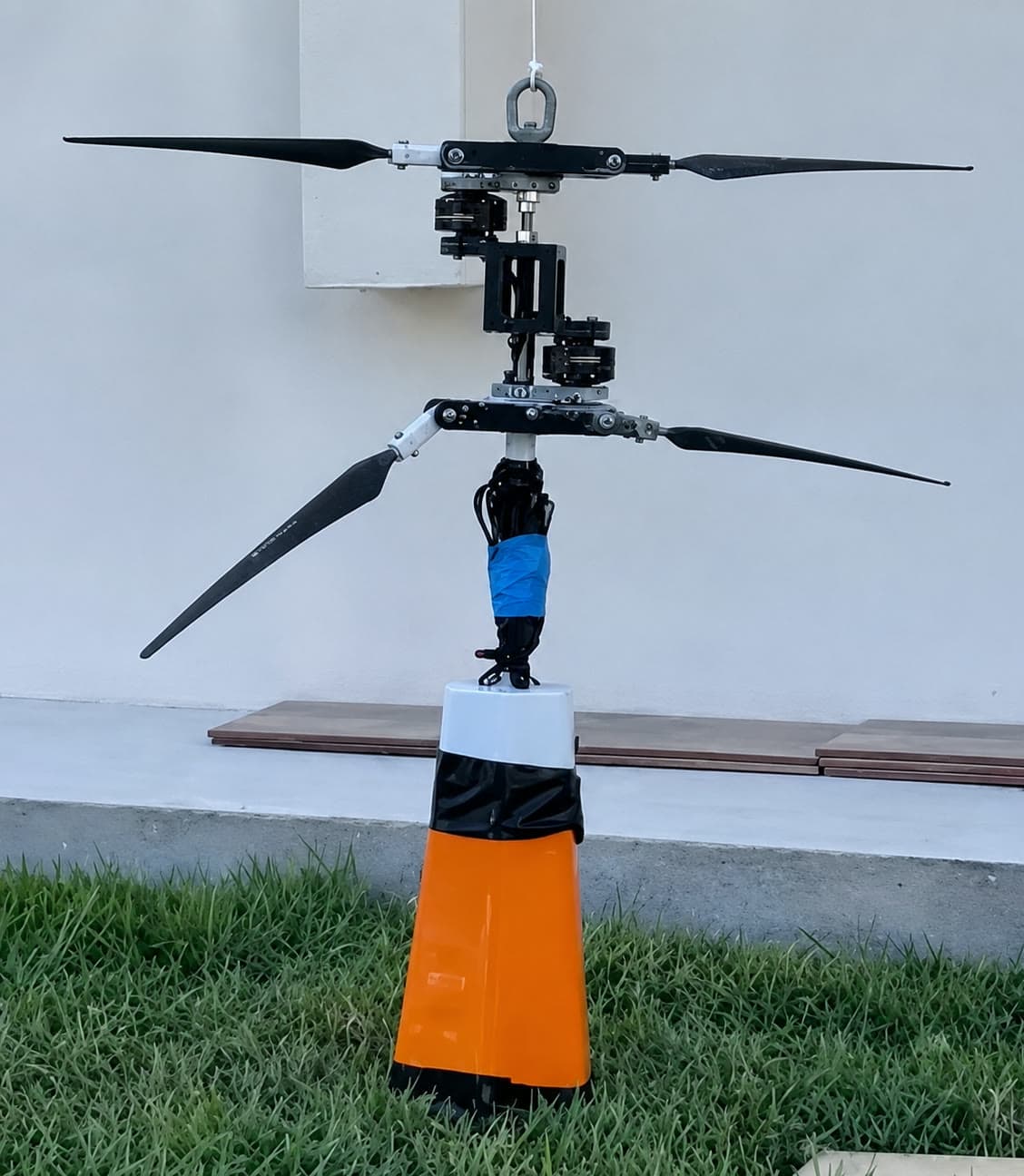
Assembled & Ground-Tested
The same payload assembled and standing on its own — tested outdoors ahead of flight, the last check before C.H.I.L.D. was cleared to fly inside Starfire.
Starfire in Alabama
Launch footage, manufacturing, integration, and the team behind the mission.
Be Part of the Mission
Powered by people who believe in the mission
Explore the rest of the fleet, support the team, or join the next launch campaign.